Tag: social media

  • You Need to Be Here So I Can Make Money

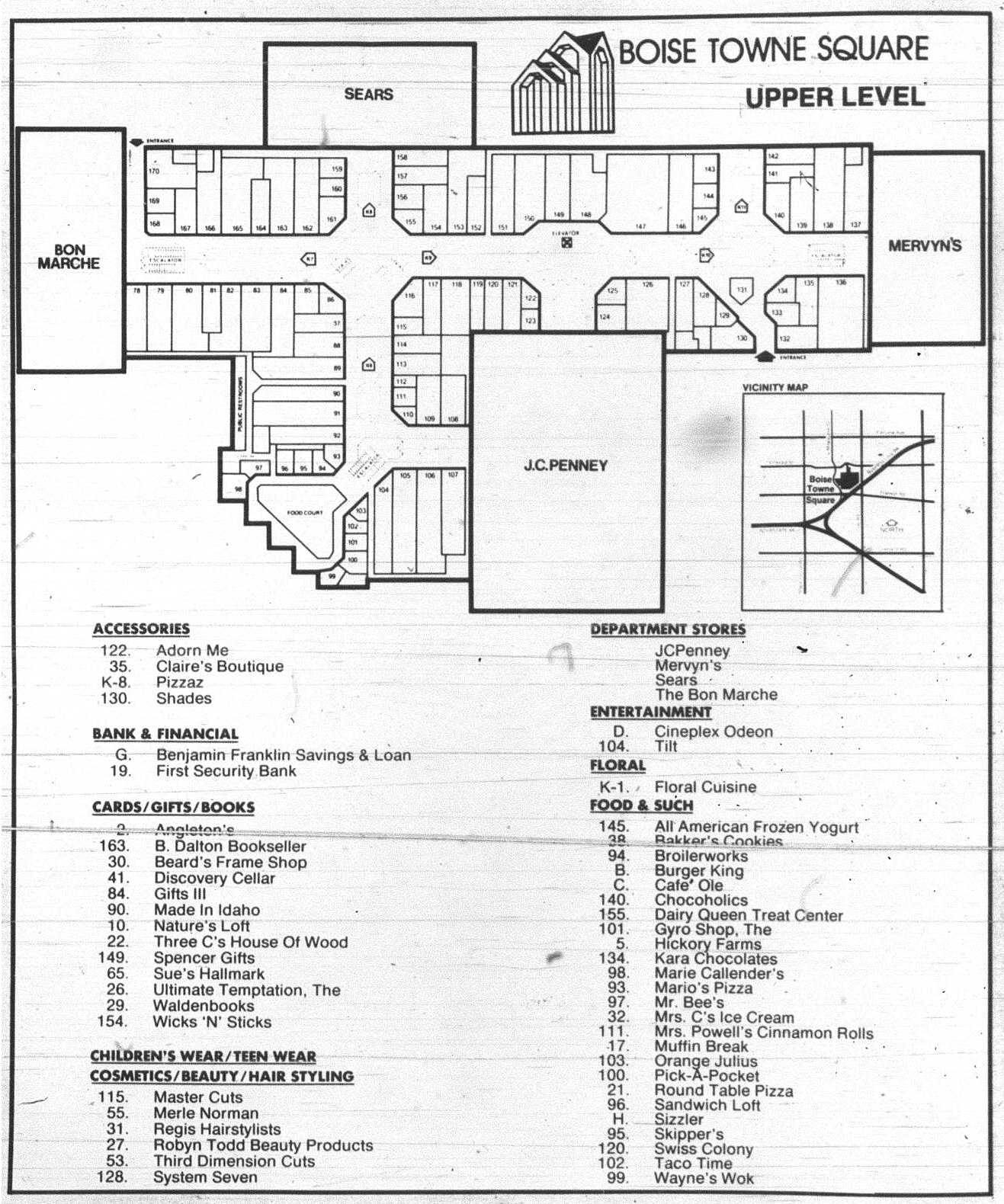
    Opening in 1965, the Karcher Mall in Nampa, Idaho was the first shopping mall west of the Mississippi. This is what I was told, at least, as a child, the type of storytelling common in those days when information was not readily available to the masses, and so people just said things that sounded right.

    This is a photo of the mall from 1985, graciously taken from a Facebook group called Vintage Karcher Mall. Somewhere on the second floor was a space for the long defunct CAN-ACT, a local community theater group in which my mother participated when I was young. I think that Thoroughbred Restaurant Lounge place became a Mexican restaurant at some point.

    Here is an overhead shot of the mall from 1986. And here’s what it looks like today:
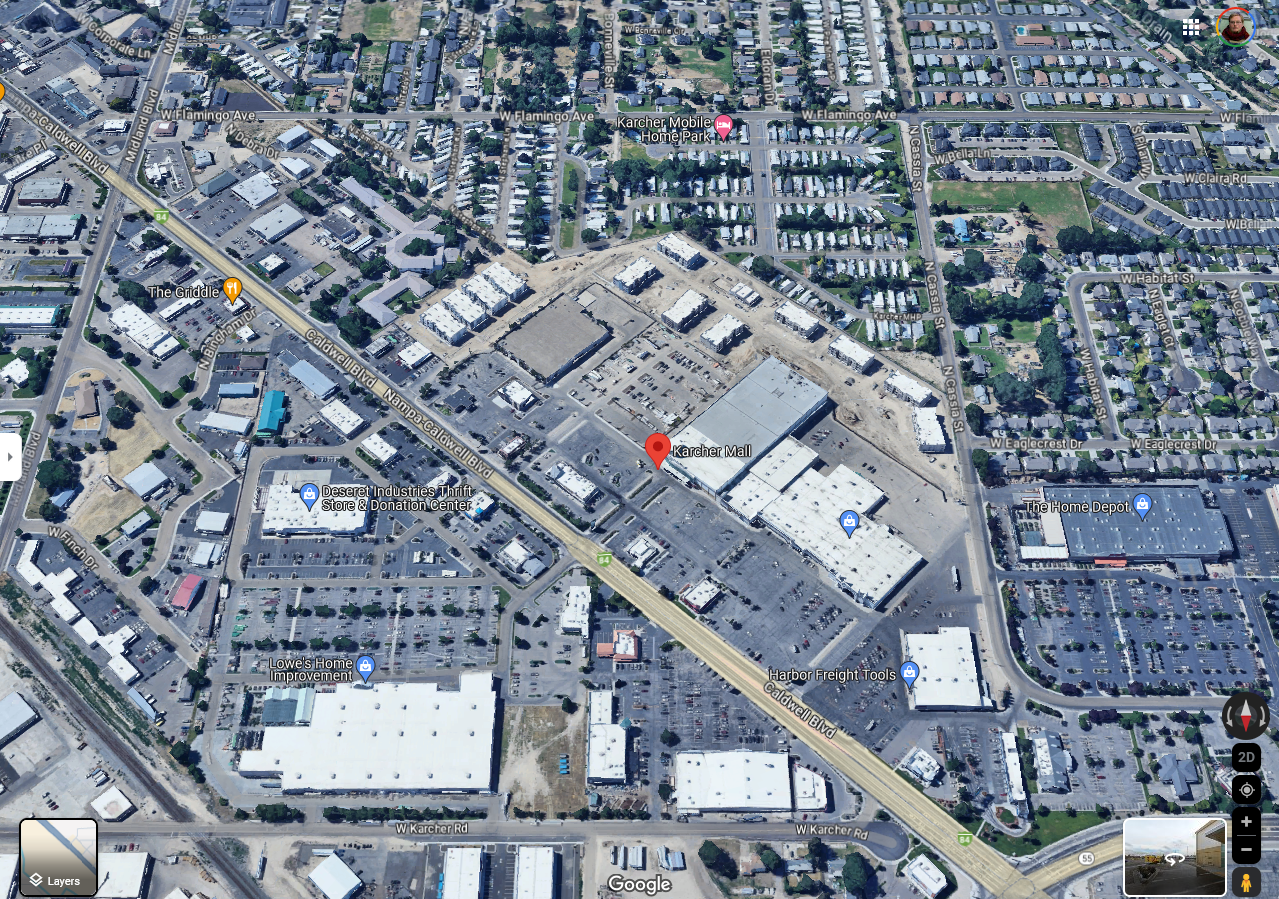
    I think it’s kind of awesome that the mobile home park (top left corner of the 86 photo and top of modern day photo) still exists. Among all that new construction, or deconstruction, as they gutted part of the mall to make a parking lot. Joni Mitchell was right.

    I’m thinking about this because I’m thinking about social media again. Namely, how it is used to trap you, using psychology and your own likes, wants, and needs. The concept of “doomscrolling” is carefully manufactured by app developers who require you to stay on their app as long as possible, flicking through posts with your thumb so they can sell you advertising. Because that’s how they make money. And it’s capitalism, so they will do whatever they have to (within the bounds of legality) to get you to stay on Instagram or TikTok or whatever.

    It made me think about malls. Have you been to a mall recently? This isn’t about the decline of the mall, it’s more about a modern mall structure: malls are made to be easy to enter but hard to leave. There are always little things to do, stuff to see. Multiple levels where you can see storefronts both on your level, and the one above or below you. Very rarely in a modern mall do you feel like a store is too far away. It’s always within a bit of walking.

    Contrast this with the Karcher Mall (photo from the 90s):
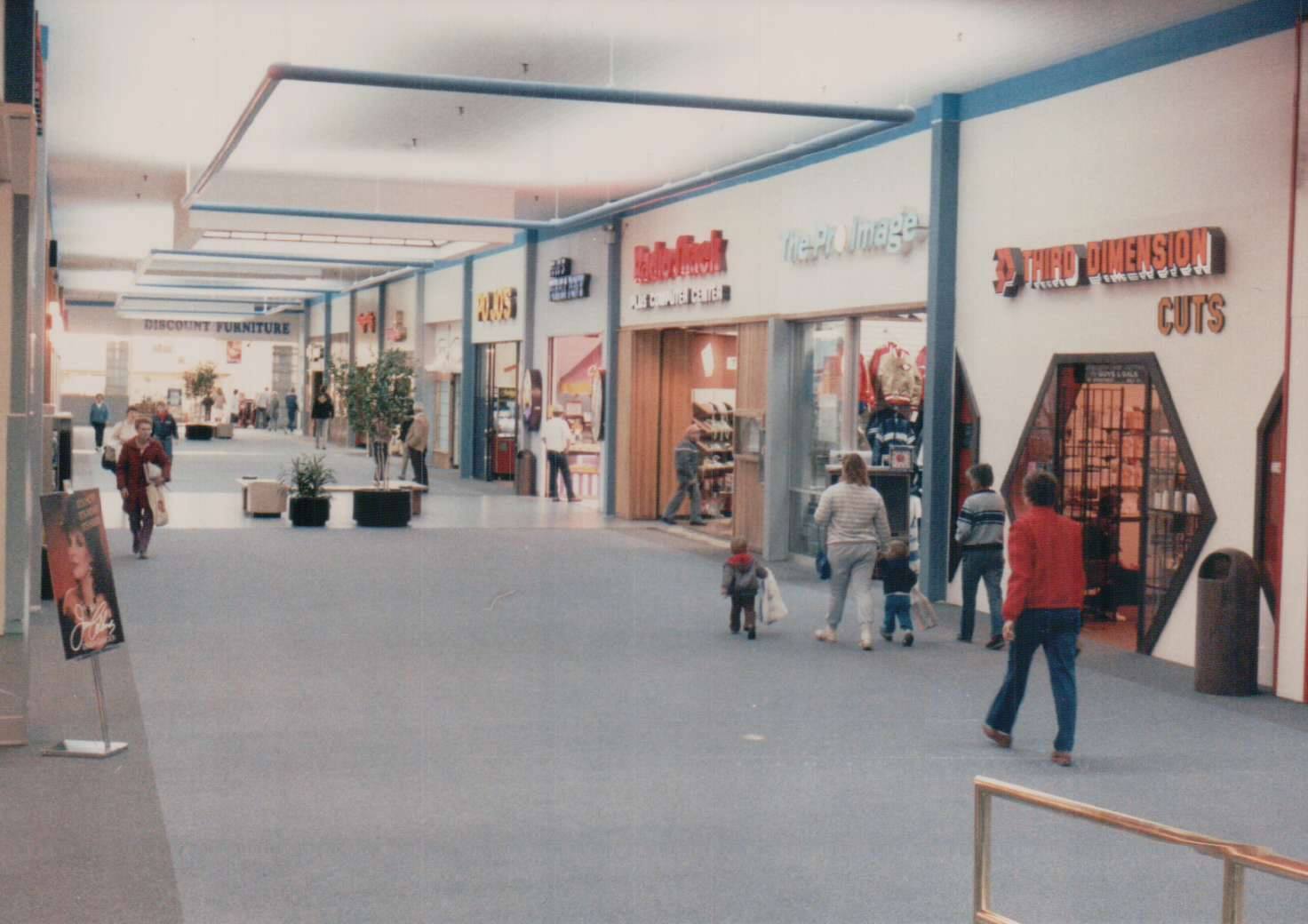
    Karcher Mall, and a lot of the older style malls, were just big long fucking hallways with stores on either side. Karcher was one floor with a small upper section in the middle that had the aforementioned Thoroughbred Restaurant Lounge and some other, non-shopping rooms. The rest was all one floor. Once you were inside, you were inside; the lights were inside, none of that skylight bullshit you’d get later on. I remember, as a kid, going to the Karcher Mall and starting on one end of the mall and trudging–trudging!–all the way to the other end, like I was marching across Europe chasing Hitler’s army back to Berlin. The JC Penney anchor store on one end was Normandy, and my father and I were the poor Americans destined for one hell of a journey.

    So, when you look at that modern photo from Google Maps and you see they knocked down a section of the mall to build a parking lot, it’s like they destroyed Poland. Or something. Look, I don’t know World War 2 history that well, just deal with it. The point isn’t about the destruction, it’s about the concept of the mall in the 1960s and how nobody had any idea of the kind of psychological warfare social engineering that was to come. Nobody thought to make malls into a neverending spiral of escalators and angled pathways that ensured customers kept walking in circles, keeping them contained longer.

    The Karcher Mall was designed by a bunch of men in rolled up sleeves and big thick-rimmed glasses who smoked cigarettes and, staring at a blueprint of a long hallway, thought, “Just put all the stores next to each other, what’s the big deal?”

    The Boise Towne Square mall opened in 1988 and it had two floors. And skylights!
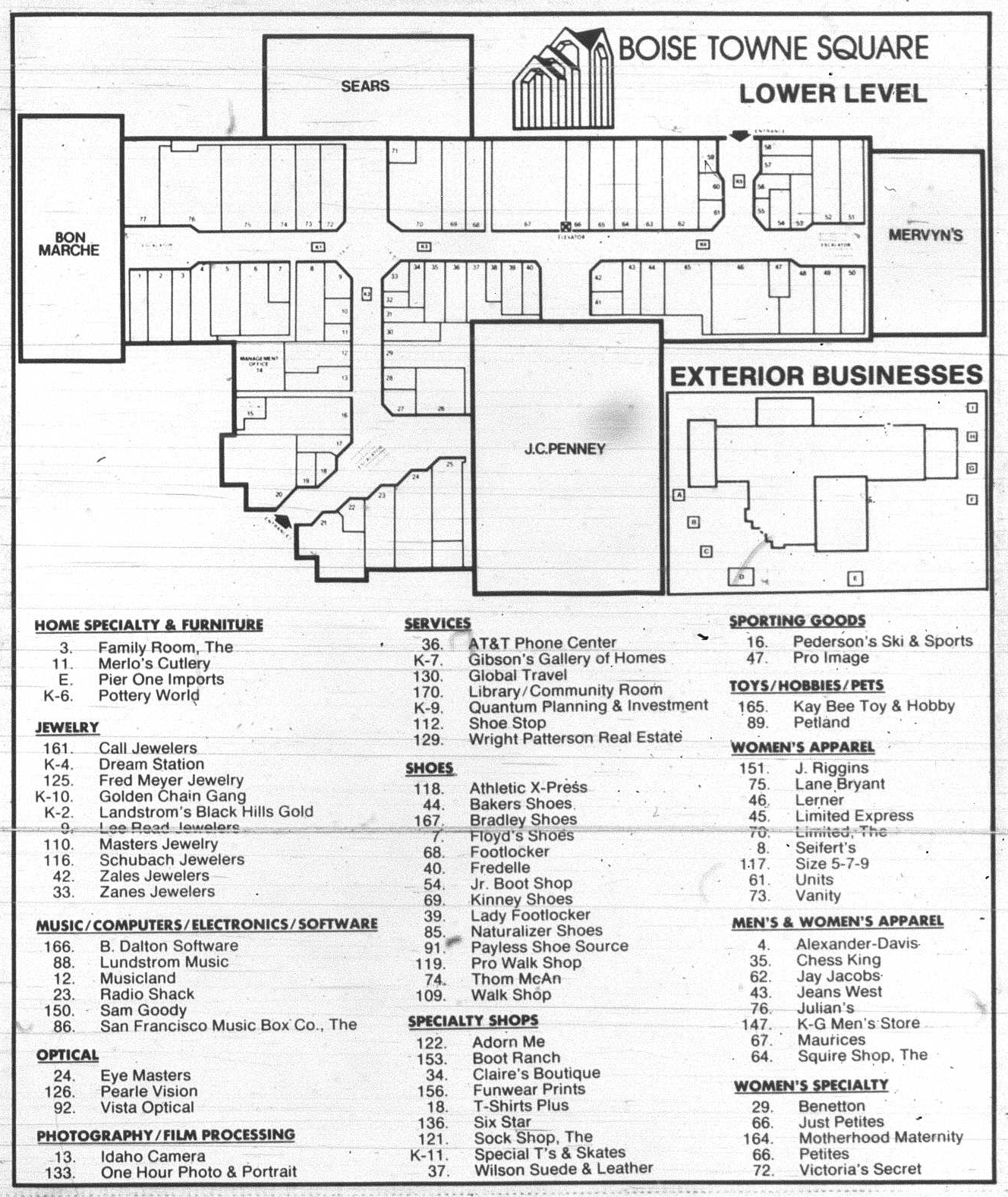
    You can see from the directory above that it was still basically a hallway, but this time there was a third hallway, and a whole other floor, and the sun shone into the mall and made it way more enjoyable than plodding down a 20 year old carpet with fluorescent lights above. It had a proper food court, and music and once you were inside it was a lot harder to get out. The Karcher Mall had exits, of course, but there were long stretches before you’d find ’em. Karcher’s method of getting you to shop was to trap you inside the building like a jail; the Towne Square mall on the other hand trapped you by confusing you and overpowering you with loud music and Orange Julius.

    Nowadays we don’t even need malls. It seems so alien to take up so much space with merchandise you could just as easily buy on Amazon, spending half an hour reading reviews of a vacuum cleaner that don’t read like they were published by Chinese AI machines.

    I don’t miss malls and never really liked them in the first place. They felt like a place to be dragged around by your mother while she shopped for brassieres. They’re all dying in their own unique ways, while developers take insane risks trying to keep them afloat. It’s just interesting to see the concept of “we must keep you here as long as possible so you will buy things” extend long before the invention of social media and doomscrolling. In the 60s, they made a long tube called the Karcher Mall and you’d go in one end and come out the other a changed man, and by that I mean you had bought a pair of ill-fitting shoes at Payless. In the 80s they made the Boise Towne Square mall, which let in the sunlight and distracted you from the outside world with food, music, and kiosks where sketchy looking men would try to sell you sunglasses. At both of these junctures in time, nobody thought that by the 2000s people would just click things on a computer screen and a haggard man who has 500 more deliveries today would throw them on your doorstep.

    Nowadays, companies use AI to discover what you like and make “personalized” ads, using your own psychology against you. Nowadays, if your screen remains on content for long enough (without even touching anything!), the app will determine that you liked what you saw and will keep showing related things to you. Nowadays, your phone listens to you and gives you ads based on what you say you want out loud.

    Nowadays, you are a brand, and you are a consumer, and you are an influencer, and somewhere, deep down in there, past the exfoliated skin cream and the muscle relaxing massage gun and the probiotic infusions and the multivitamins–you are a human being.
  • Thoughts on Social Media for the New Year

    I have a love/hate relationship with Mastodon. On one hand, I love that’s it’s open and free and there are no ads inherently. I love that it’s easy to find groups of people with similar likes and hobbies through hashtags. I love that it’s boring–truly, a website that isn’t trying to be flashy and branded and desperate for your money is awesome.

    What I hate about Mastodon isn’t really Masto related, it’s just a realization that it’s hard to meet people you truly like and want to hang out with. Social media isn’t set up like real life; in real life, you might go to a function, meet some new people, and decide that one or two of those people are cool enough to hang out with again in the future. On the internet, you shout into a void and a variety of voices respond back, and there really is no choice. You follow people, sure, but then it’s like you’re in their living room 24/7; you hear everything they have to say. You can stop that, by muting words, or by muting their profile, even–but then what’s the point of following them in the first place?

    And this isn’t even scratching the surface of malicious actors within the social media world. The “reply guys,” the spambots, the people who can’t take a joke. You might meet these people at a party, but you don’t have to talk to them. You can go somewhere else. Online, they’re everywhere and you’ll be spending much of your time blocking and reporting people and accounts. In real life, you can just leave the party!

    When I was a teenager, we had AOL chat rooms, we had forums, and we had messaging programs like AIM and ICQ. I’m confident that if these existed now, they would be just as corrupt as they were then, but back when the internet was new and unknown, chatting in these spaces felt pioneering. People were even more anonymous back then, too; chat rooms were less like a cesspool and more like a tide pool, filled with the bad and the good; filled with creatures attempting to thrive in an environment. And when those environments failed, you moved to proto-social media–AIM, a place where you could directly talk to your friends.

    But it’s 2023 now. Everything is a Brand and/or a Monetization. Nobody scrolls through social media attempting to socialize. Imagine the “social” part in tiny font and the “media” part in giant font, emblazoned with a symbol at the end, to remind you to watch what you say, you don’t want to infringe on copyrights and trademarks, okay? We’ll see you in court!

    Mastodon changed that, but for how long? And can a post-Twitter social media site ever work the same way? Twitter was a, pardon the term, zeitgeist. It was a sociological petrie dish, and we were the bacteria, squiggling around, trying to figure out what this thing was. And then the Arab Spring happened, and people suddenly realized that Twitter was an excellent place for news. News news news. And thus the site had A Purpose, a direction. This, in a way, killed the site for those of us who liked to tweet stupid, silly things. But it drew visitors which meant eyeballs with pocketbooks for advertisers. It was only a matter of time before it became Brand and Monetization.

    So when people fled to new social media sites after Elon Musk displayed his flagrant stupidity like a hippo flicking its shit all willy nilly with its tail, we didn’t do so with a sense of exploration of something new, we did so already “knowing what Twitter was supposed to be.” This infection of knowledge ultimately soured Mastodon for me.

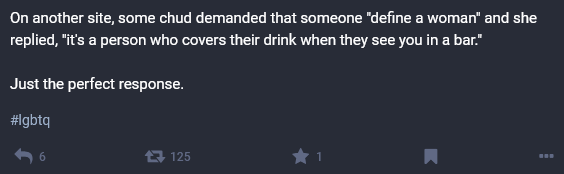
    For example, look at this post, which was on the Explore page of Mastodon, a page that showcases some of the more popular posts on the site:

    Now, before you’re like “Josh hates gay people,” my point with this example is not specifically that I hate gay people (I don’t), it’s generally that this post is self-righteous and annoying. But apparently it’s the kind of discourse people like, a real “preaching to the choir” type of post that is easy to like, because it’s funny and it’s pertinent to the LGBTQ crowd. It’s not just LGBTQ though, it’s politics in general, and money, and, in Mastodon’s case, an excessive amount of software engineering and programming/

    I just find this kind of stuff boring and uninspired. It’s why I muted George Takei, a popular social media figure both on Twitter and on Mastodon. Or Robert Reich (father of College Humor/Dropout founder Sam Reich, by the way). If you like “old men writing pithy statements about politics,” then those two are perfect for you. But I just, desperately at this point in my life, want to use a social media site where we don’t talk about politics. Not because I hate politics or because I am apolitical, but because there is no site where we just have fun and enjoy life anymore. In order to make that experience happen, we have to curate it. We have to mute and block and craft our social media experience, as if social media were a bonsai tree. If I owned a house where all the rooms except one had toilets in them, you’d bet your ass I’d seek solace in the toilet-free room.

    In real life, you can easily enjoy time without politics, without ads, without brands (well, maybe not this one). Online, every. single. site is trying to pull you in one direction or another, trying to anger you or make you cry. Yes, there are some terrible things going on in the world right now, which is why it’s even more important that there are places you can go where you don’t have to look at it. I don’t think the men, women, and children in Gaza right now would want to force you into their world everywhere you look.

    We don’t have to sit and simmer in the boiling pot just because someone else is in there already. The problem with social media is–it’s all a boiling pot, because the investors, the venture capitalists, the billionaires, want it to boil. They need it to boil, because it’s easier to extract money when the humans have boiled for a few hours.

    I don’t have an answer to this. I don’t think the majority of us can answer this, really, except to stop using social media sites. To put our eyes and our money somewhere else. Maybe I haven’t found the right crowd. Maybe I’m just sick of constantly pruning the bonsai tree. But this is my primary reason for getting away from social media for 2024, to escape the constant boiling, to let the bonsai tree grow, to take a breather from the constant churning of Brands and Monetization.

    I recommend you do the same. And turn off your notifications! You don’t need to be notified of everything all the time.

  • The Great Social Media Cleanse of 2023

    I’m seriously considering turning off/deleting all of my social media for 2023, with one exception: BeReal. The concept of not being able to see what I’m up to other than once per day at a random time is funny to me. The problem is that not enough of my friends are on BeReal, which is a shame. It’s fun! I genuinely like being able to scroll through people’s random, sometimes boring lives. I’m sick of stuff being curated, presenting the “best” of us. That’s nice on occasion, but gimme some real shit too.

    Also, logistically, it would be two exceptions: the aforementioned BeReal, and Reddit, culled down to just the D&D related subreddits, only because there’s a treasure trove of battle maps there. I just did that, in fact, because it sounded like a good idea regardless, and it’s been a fine transition so far. I don’t miss any of the other subreddits I was subbed to, and whenever I need information about X I just google “X” + “reddit” and go read comments. I’m done with Reddit comments. I’m just sick of reading comments in general.

    In truth, I’ve already started the Great Social Media Cleanse of 2023. I deleted TikTok and am surprised at how little I desire it back in my life. I miss some videos, but not enough to redownload it. I also hated posting videos that got no traction. I’m sick of not gaining traction with apps anymore. I’ll just be tractionless now, okay?

    My Twitter account is officially gone as well and that feels fine too. I sometimes miss having an outlet for tiny thoughts, but it’s not a big deal. Twitter tricked me into thinking I needed to air every bit of jostled nonsense that popped out of my brain.

    I deleted my presence from dating apps except for Bumble. This was a decision born out of MatchGroup. I signed up for Match and its interface and general vibe were so goddamn annoying that I went to delete my account, only to have to jump through a bunch of hoops to do that. Hey, app developers: the harder you make it for people to delete their accounts, the more likely I am to delete my account.

    So anyway I deleted that and OKCupid. I have had virtually no success with dating apps, and am constantly reminded of that when I’m on them. Out of, like, fourteen years using OKCupid, I had one short dating session with a woman who ended up being a catalyst for my pent-up homesickness and loneliness from moving to Portland, which ended up getting me into therapy, which I guess is a win overall. The second was a much more recent short relationship that I ended because the pandemic hit and I wasn’t sure I was into the relationship enough to continue it over Zoom.

    Anyway, this isn’t a dating post. OKCupid was cool and then Match bought them and now MatchGroup owns EVERY dating app including Hinge, which I was planning on keeping. Dating has become a capitalist scheme which is like a nuclear apocalypse for the human soul. Bumble is the only dating app that I’m aware of that is popular and is not owned MatchGroup. (Except Raya, but I’m not a cool celebrity and also Raya is Apple only which is INSANE.) In general I don’t think dating apps are good but I feel like I have to have at least one of them, just in case a miracle occurs.

    I’m debating over Instagram. I need some tether to friends and family and that appears to be Instagram. Plus, I like sharing pictures and stuff. Despite Facebook/Meta’s insistence on ruining things, Instagram still at its core feels like a photo sharing app. Yes, even with reels and all that shit. It really feels like nobody is ready to transition to a new social media app in any case. I think we’re all sick of them, and we stick to IG or Facebook because we don’t want to deal with anything new.

    For now, my social media has been whittled down to:

    • BeReal
    • Instagram
    • Strava
    • D&D subreddits
    • Bumble (not a social media app but still)
    • Discord

    I put Discord but that’s basically a glorified friends chat at this point. Instagram is the real stickler of the group. I just like sharing pictures with friends. I really wish IG was just that and not the incessant explore and ads and influencers and hot tattooed models that I like! don’t get me wrong! but also could do with like 75% less of. This is a problem with The Algorithm: you click on one hot tattooed model and suddenly your feed is full of hot tattooed models.

    So anyway, if you don’t see me on social media next year, it’s because I’m doing my best to not be on social media. Follow me on Strava, so we can talk about exercise. Or just read this blog! I’ll definitely be here.

  • Trivial Opinions

    I’m getting tired of people having strong opinions over things that one should not have strong opinions over. It feels like trivial opinions are competitions now, and having the loudest argument for your opinion means you won. There’s something about today’s society that makes people should “PINEAPPLE DOESN’T BELONG ON PIZZA” from the fucking rooftops as if they were trying to appease Jesus Christ himself. This is the de facto thing people are writing on their dating apps. Pineapple does/doesn’t belong on pizza.

    Dudes: who gives a fuck? Who actually cares?

    Having strong opinions about banal shit is the new “small talk.” People claim to hate small talk but don’t mind arguing about pineapple on pizza until their face turns red.

    I think it’s the internet’s fault. More specifically, I think it’s content creation’s fault. Content creation has given people this concept that they must be making content all the time, and then paying them just enough to make it seem lucrative to have content. The byproduct of that is that everyone makes videos about everything because there’s a chance it might go viral and suddenly you’re making lots of TikTok money. It’s the new lottery: if you play long enough, there’s a chance you might become rich and famous. That chance is astronomically small, but playing it absolutely and always benefits the company that is providing the service. Your TikTok video may not go viral, but people will scroll past it to the juicy advertisement that nets Tencent about … ten cents.

    Thus, it is ultimately worth it for corporations for you to have the biggest, dumbest opinion possible, and that plus the need to generate content constantly means that you will scrape the bottom of the barrel trying to come up with something that is appealing enough to a viewer to net you another viral lottery ticket.

    We’ve coined this “the hustle,” but it’s really just making money for big corporations and them (potentially) giving you a sliver of that money back. Yes, a precious few people make a lot of money on Twitch and YouTube. But the signal to noise ratio is astronomically low. And yet, since we see people being successful, we assume that being on Twitch or YouTube will make you successful eventually. It won’t, not just on your content alone. A lot of those successful people had contacts or networked their way into success. Or were just rich already and bought it.

    All of that is to say: please reconsider your strong opinion on bullshit. Nobody cares if Marvel is better than DC. That is not an opinion that should raise your heart rate. Pineapple on pizza? Who cares. Dogs on the couch? Who cares. Just live your life and worry about the bigger stuff.

    Side note: I encourage every single one of you who may happen to read this to please curate your social media feeds and try to weed out overly negative people. The video game content industry is a big offender for this. Your life will be better if you don’t surround yourself with constantly negative people. I promise you.

  • Mastodon is Not Nicoderm

    It’s Monday, the Monday after a full week of Elon Musk owning Twitter. I deactivated my Twitter account on a whim after just kind of being done with it. Not my account, per se, but the vibe of Twitter in general. It’s just off. It’s bad. The sociological decay rate of social media seems to put the Best By date around 10-15 years after its inception. So, I once again signed up to Mastodon, after deleting my previous two attempts and then realizing that I can’t get my old usernames back. Oh well, who cares.

    A lot of Mastodon now is reactive: people reacting to Twitter, mostly. It’s not really a society as it is a shared trauma experience, one where we’ve all collectively escaped from our abuser and are now qualifying ourselves in reaction to that. It’s annoying, is what I’m saying.

    This Monday, I feel the itch. The itch to tweet. To say something dumb on Twitter. I’ve tried on Mastodon:

    This is what I would call a Quintessential Josh Tweet. A QJT. Something dumb that would pop up in my head and that I’d type out on Twitter as fast as humanly possible. This is Weird Twitter. My type of people are people who would see this tweet and appreciate the humor. They don’t have to laugh, just appreciate.

    But Mastodon doesn’t scratch that itch, for two reasons: one, I don’t know enough people there. That’s fair, I just started up again. And two, this is not what I’m seeing on my timeline. This one’s a little more difficult to fix. You have to find the right people. But in a way, I don’t want to find the right people. I don’t want to join a “comedy” instance because then it’s all people trying to be comedians. Plus, as Mastodonians continue to remind us, instances don’t even matter because you can see other people’s postsI refuse to call them toots. across all instances. Fans and friends, that’s all I want. And not even “fans” necessarily, more like … appreciaters.

    Mastodon is a poor nicotine patch for Twitter, despite all the tech folks trying to convince us that it is. Decentralization is good perhaps but for social media? The concept of “decentralizing” a thing where the point is for people to come together doesn’t make much sense to me. I read a post from someone saying that they should rename “instances” to “communities” … like Google+, which failed. I think Google+ failed in part because a social media concept like Twitter–fast paced, short messages–wants to relate to people in a general sense, rather than a specific, community sense. In other words, you don’t want to have to negotiate a bunch of community “threads” to find things that you want to read. Plus, you can already create your community on Twitter by curating who you follow. Now you want me to split that again into communities?

    There’s a vast, vast difference between what people in tech think social media should look like, and how the general populace operates social media. Tech wants to bring in features, but most people want the app to be as simple as possible. People don’t want to know about instances. They just want to post things and read things, and they want to know how to block people. Mastodon is pretty much this simple, it’s just that the users are making things confusing by constantly elaborating on stuff that I don’t care about. I don’t really care about instances; I do care about Mastodon being able to quickly and effectively “sever the limb” of alt-right/extremist instances. But I want no part of that. I just want to read and post things, and I want the things I read to be things I like, not people constantly telling me how great Mastodon is and all the multitudinous things I can do with it.

    Thankfully, Elon Musk is absolutely fucking up when it comes to running Twitter, which is delightfully hilarious in a way. Guy’s like a five year old who got handed a $1,000 camera and thinks he’s going to take Pulitzer Prize winning photographs with it, but then the first photo we see is just a blurry dog’s anus. “I did it!” he cries. “Give me my Pulitzer now.”

    Something makes me think this is one big misguided attempt to try and get Grimes back. “Look, Grimes, I bought Twitter!” he types into his phone. Sends text. Is left on read.

    I think Mastodon will mellow out over the next few weeks as the adrenaline of leaving Twitter wears off and everyone realizes it’s just another app. They’re all just apps. Meaningless, ultimately. Get food, get sleep, procreate to extend the life of the species. Then very far down the list: check social media accounts.