Opening in 1965, the Karcher Mall in Nampa, Idaho was the first shopping mall west of the Mississippi. This is what I was told, at least, as a child, the type of storytelling common in those days when information was not readily available to the masses, and so people just said things that sounded right.
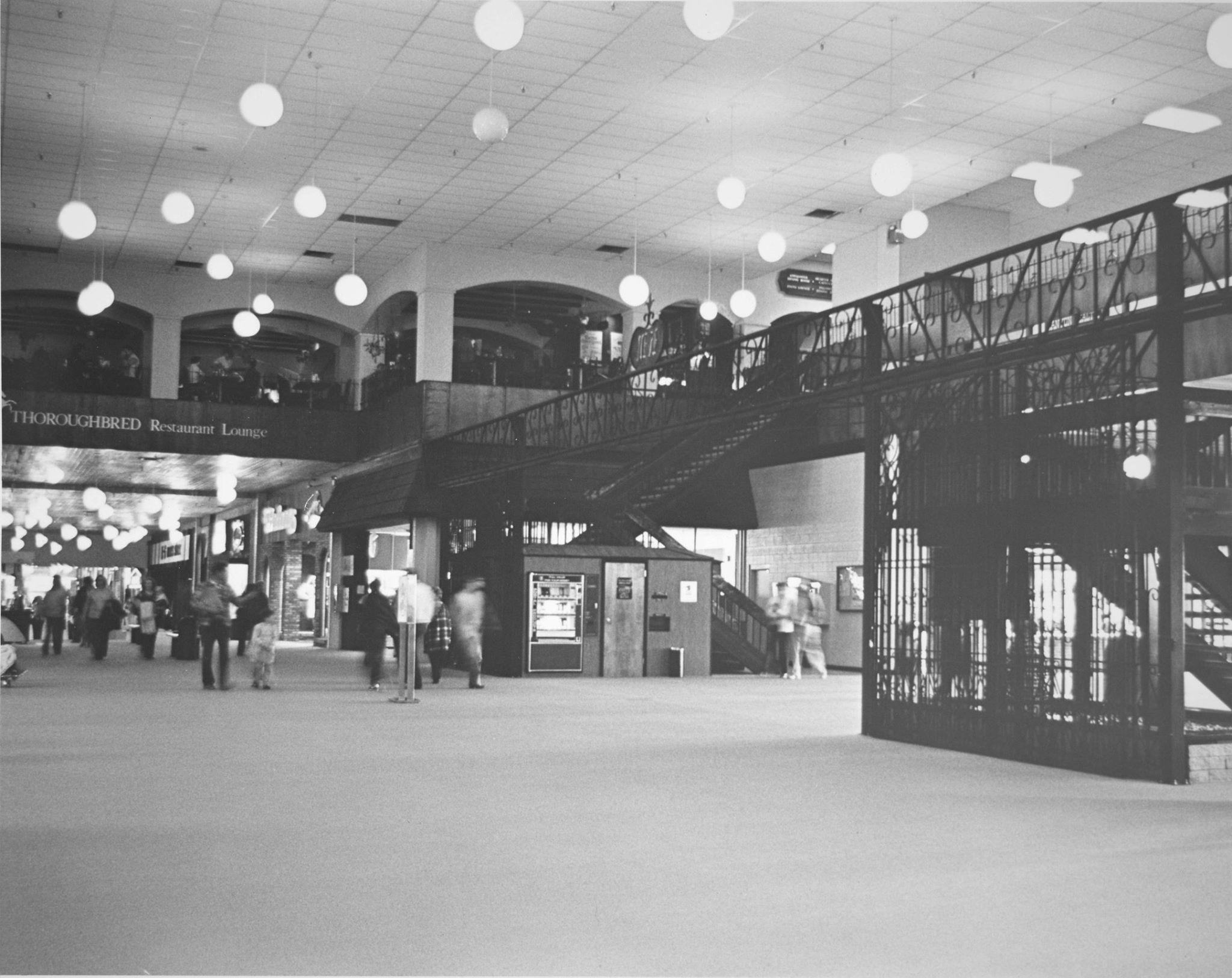
This is a photo of the mall from 1985, graciously taken from a Facebook group called Vintage Karcher Mall. Somewhere on the second floor was a space for the long defunct CAN-ACT, a local community theater group in which my mother participated when I was young. I think that Thoroughbred Restaurant Lounge place became a Mexican restaurant at some point.
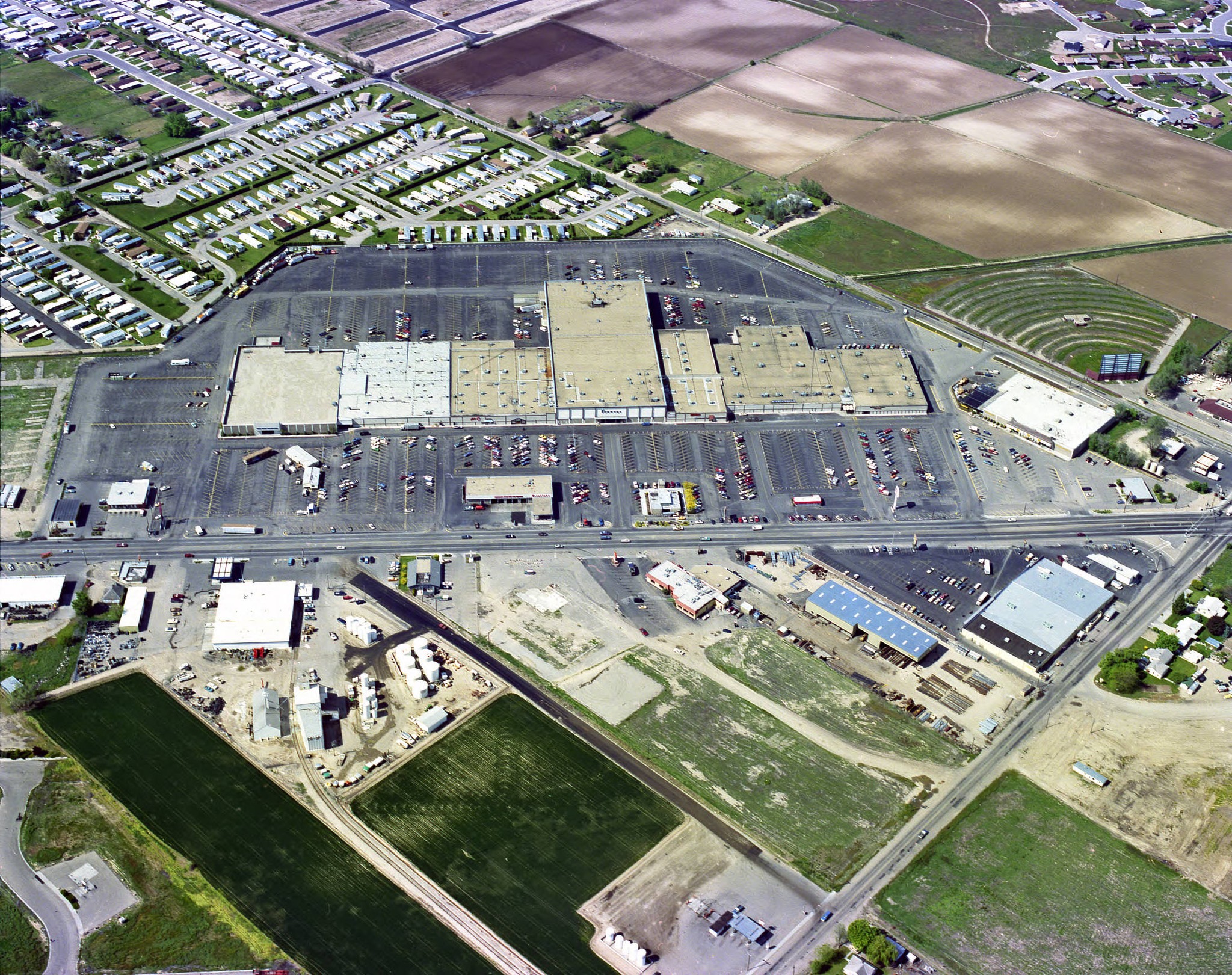
Here is an overhead shot of the mall from 1986. And here’s what it looks like today:
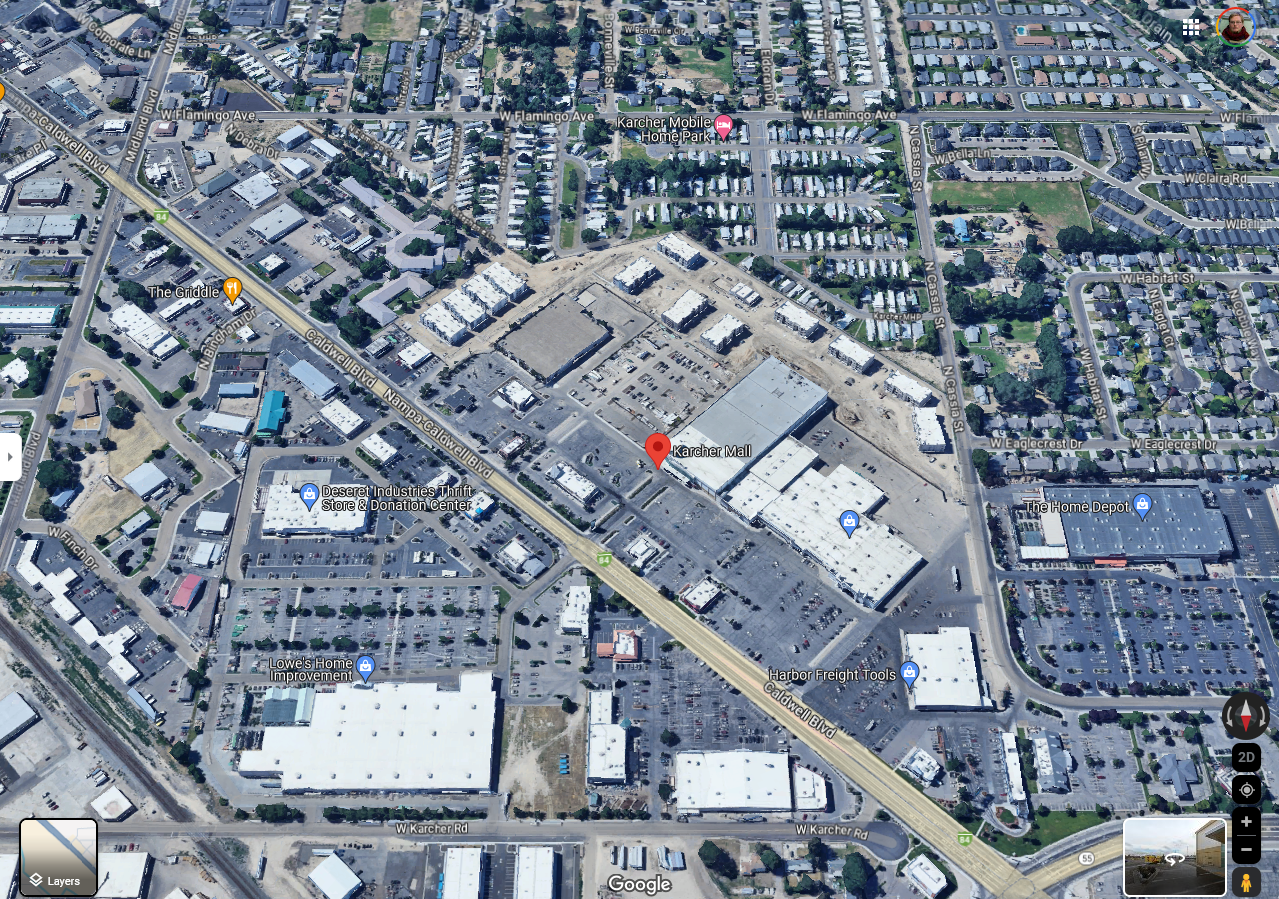
I think it’s kind of awesome that the mobile home park (top left corner of the 86 photo and top of modern day photo) still exists. Among all that new construction, or deconstruction, as they gutted part of the mall to make a parking lot. Joni Mitchell was right.
I’m thinking about this because I’m thinking about social media again. Namely, how it is used to trap you, using psychology and your own likes, wants, and needs. The concept of “doomscrolling” is carefully manufactured by app developers who require you to stay on their app as long as possible, flicking through posts with your thumb so they can sell you advertising. Because that’s how they make money. And it’s capitalism, so they will do whatever they have to (within the bounds of legality) to get you to stay on Instagram or TikTok or whatever.
It made me think about malls. Have you been to a mall recently? This isn’t about the decline of the mall, it’s more about a modern mall structure: malls are made to be easy to enter but hard to leave. There are always little things to do, stuff to see. Multiple levels where you can see storefronts both on your level, and the one above or below you. Very rarely in a modern mall do you feel like a store is too far away. It’s always within a bit of walking.
Contrast this with the Karcher Mall (photo from the 90s):
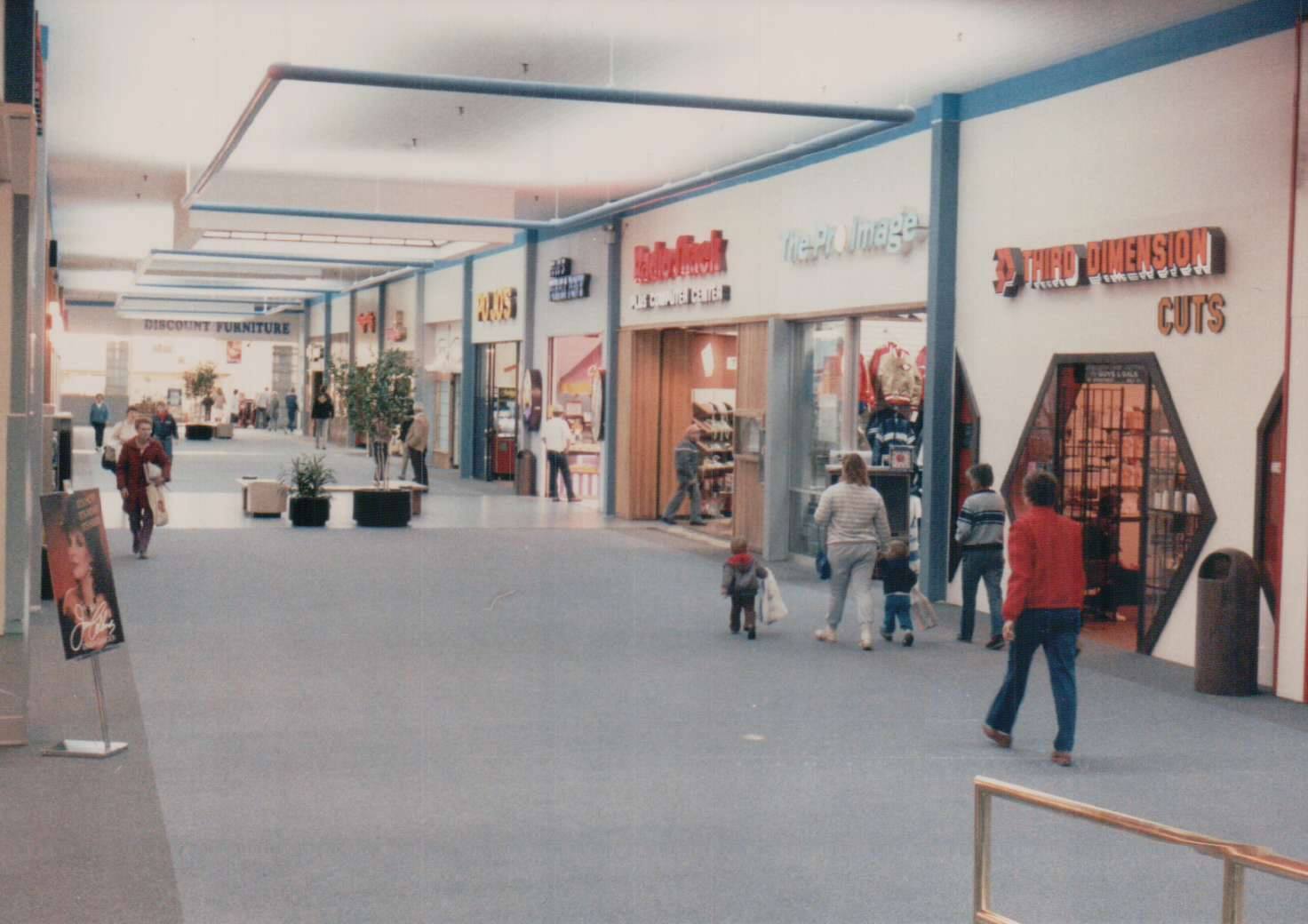
Karcher Mall, and a lot of the older style malls, were just big long fucking hallways with stores on either side. Karcher was one floor with a small upper section in the middle that had the aforementioned Thoroughbred Restaurant Lounge and some other, non-shopping rooms. The rest was all one floor. Once you were inside, you were inside; the lights were inside, none of that skylight bullshit you’d get later on. I remember, as a kid, going to the Karcher Mall and starting on one end of the mall and trudging–trudging!–all the way to the other end, like I was marching across Europe chasing Hitler’s army back to Berlin. The JC Penney anchor store on one end was Normandy, and my father and I were the poor Americans destined for one hell of a journey.
So, when you look at that modern photo from Google Maps and you see they knocked down a section of the mall to build a parking lot, it’s like they destroyed Poland. Or something. Look, I don’t know World War 2 history that well, just deal with it. The point isn’t about the destruction, it’s about the concept of the mall in the 1960s and how nobody had any idea of the kind of psychological warfare social engineering that was to come. Nobody thought to make malls into a neverending spiral of escalators and angled pathways that ensured customers kept walking in circles, keeping them contained longer.
The Karcher Mall was designed by a bunch of men in rolled up sleeves and big thick-rimmed glasses who smoked cigarettes and, staring at a blueprint of a long hallway, thought, “Just put all the stores next to each other, what’s the big deal?”
The Boise Towne Square mall opened in 1988 and it had two floors. And skylights!
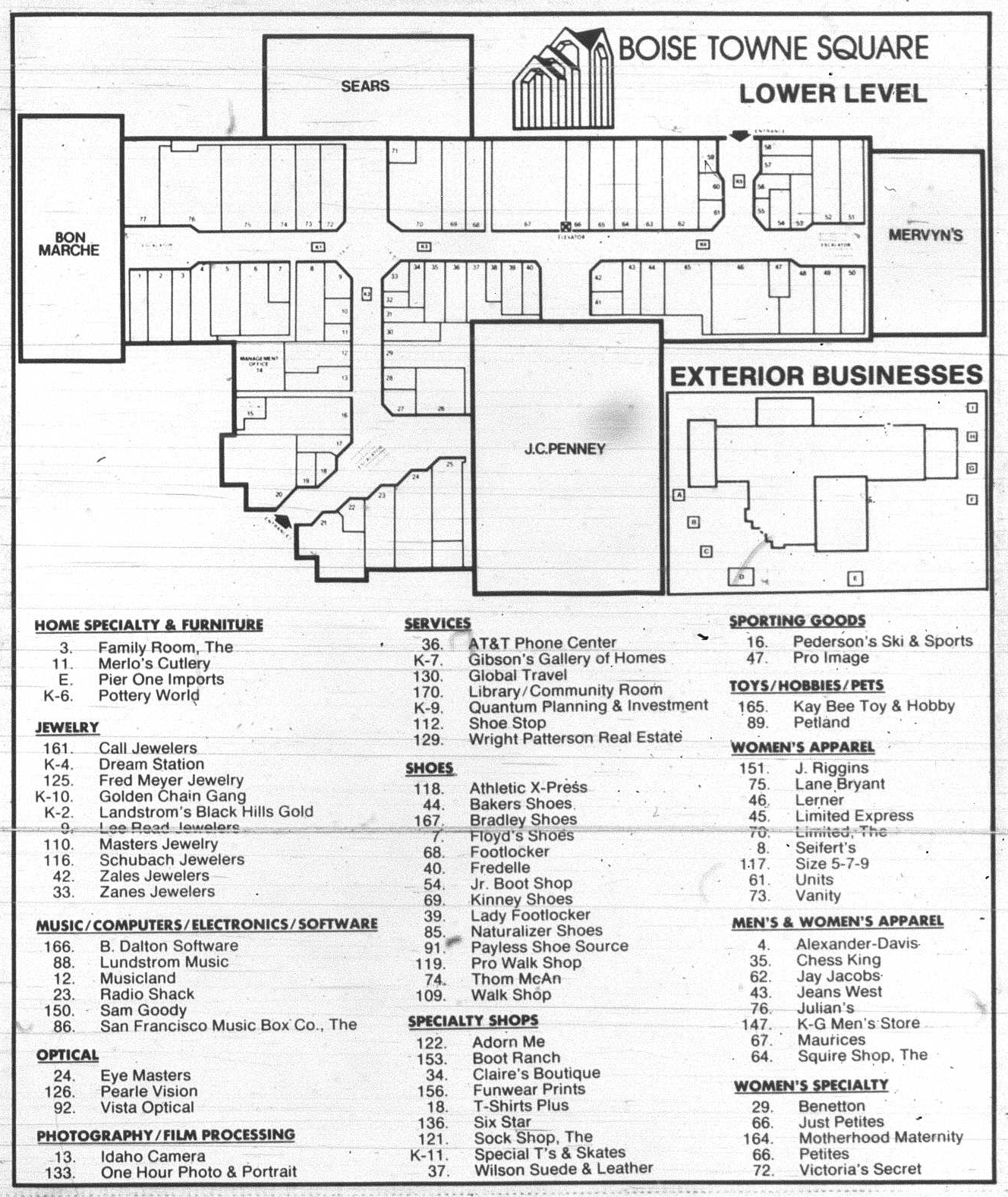
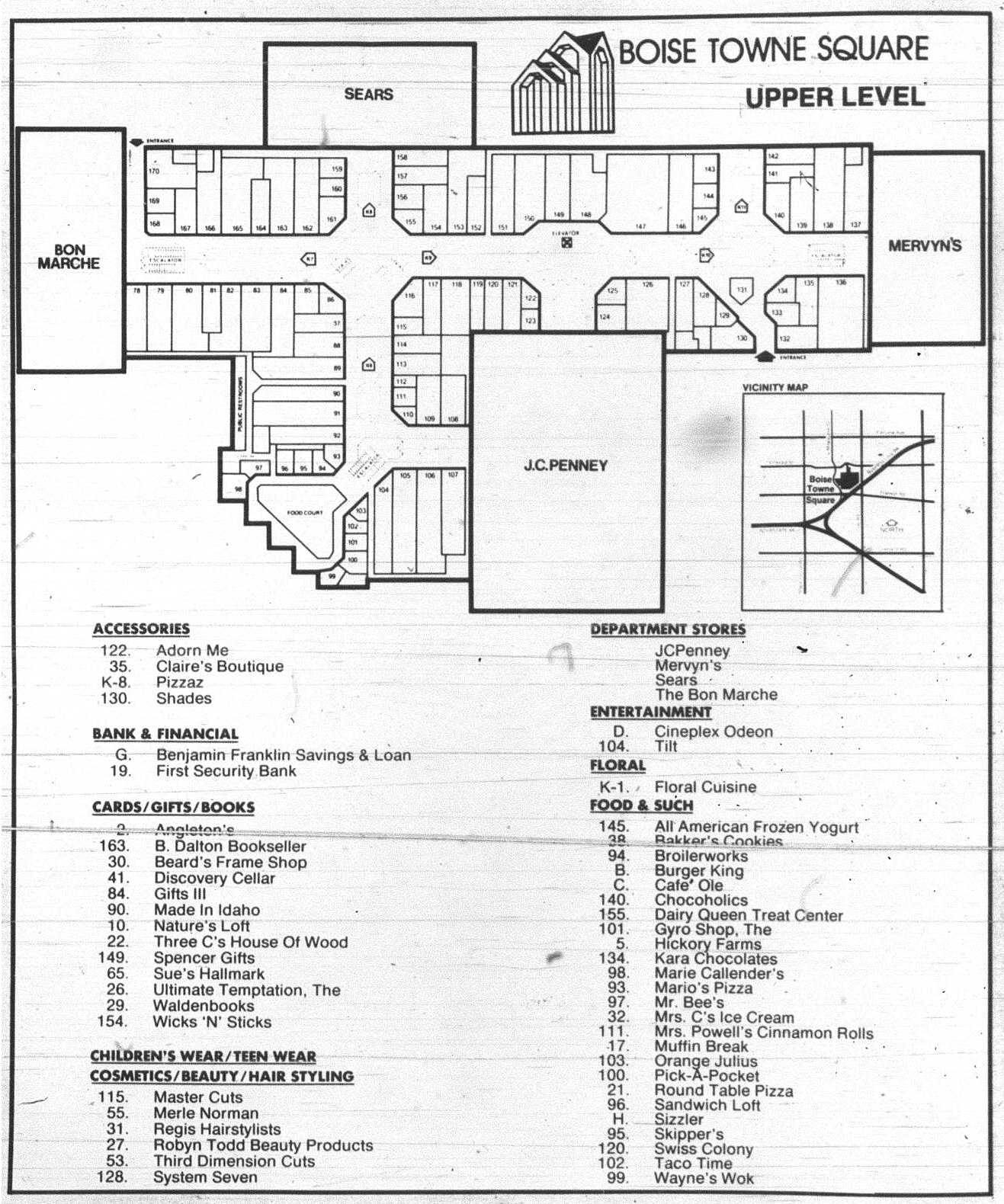
You can see from the directory above that it was still basically a hallway, but this time there was a third hallway, and a whole other floor, and the sun shone into the mall and made it way more enjoyable than plodding down a 20 year old carpet with fluorescent lights above. It had a proper food court, and music and once you were inside it was a lot harder to get out. The Karcher Mall had exits, of course, but there were long stretches before you’d find ’em. Karcher’s method of getting you to shop was to trap you inside the building like a jail; the Towne Square mall on the other hand trapped you by confusing you and overpowering you with loud music and Orange Julius.
Nowadays we don’t even need malls. It seems so alien to take up so much space with merchandise you could just as easily buy on Amazon, spending half an hour reading reviews of a vacuum cleaner that don’t read like they were published by Chinese AI machines.
I don’t miss malls and never really liked them in the first place. They felt like a place to be dragged around by your mother while she shopped for brassieres. They’re all dying in their own unique ways, while developers take insane risks trying to keep them afloat. It’s just interesting to see the concept of “we must keep you here as long as possible so you will buy things” extend long before the invention of social media and doomscrolling. In the 60s, they made a long tube called the Karcher Mall and you’d go in one end and come out the other a changed man, and by that I mean you had bought a pair of ill-fitting shoes at Payless. In the 80s they made the Boise Towne Square mall, which let in the sunlight and distracted you from the outside world with food, music, and kiosks where sketchy looking men would try to sell you sunglasses. At both of these junctures in time, nobody thought that by the 2000s people would just click things on a computer screen and a haggard man who has 500 more deliveries today would throw them on your doorstep.
Nowadays, companies use AI to discover what you like and make “personalized” ads, using your own psychology against you. Nowadays, if your screen remains on content for long enough (without even touching anything!), the app will determine that you liked what you saw and will keep showing related things to you. Nowadays, your phone listens to you and gives you ads based on what you say you want out loud.
Nowadays, you are a brand, and you are a consumer, and you are an influencer, and somewhere, deep down in there, past the exfoliated skin cream and the muscle relaxing massage gun and the probiotic infusions and the multivitamins–you are a human being.